Overview
Basement mold is the most common mold problem we deal with in Regina. The combination of below-grade concrete walls, seasonal soil moisture changes, aging weeping tile, and the natural tendency for basements to be cooler and less ventilated creates conditions that are almost purpose-built for mold growth. If your basement smells musty or you've seen dark spots on the walls, it needs attention.
Mold in Regina basements usually starts at the foundation walls. Below-grade concrete is naturally porous and wicks moisture from the surrounding soil. Older homes built before current waterproofing standards often have inadequate exterior membranes or failed weeping tile that allows water to migrate through the foundation. Once that moisture reaches the interior surface, it can wick into wood framing, fiberglass or batt insulation, and drywall — all of which are organic enough to support mold growth.
Finished basements are a particular concern because the problem is hidden. A finished wall hides everything behind it. Homeowners often don't know there's mold until they smell it, someone in the family starts having respiratory symptoms, or they go to renovate and open the wall to find significant colonization. By that point, what could have been a contained problem has often spread to multiple stud bays or floor joist cavities.
Rim joists — the horizontal framing members at the base of the first floor — are another common mold location that gets missed. They sit right at the transition between the foundation and the frame, are typically insulated with batts that trap moisture, and run along the perimeter of the entire basement. When they're affected, the mold is effectively throughout the whole perimeter of the structure.
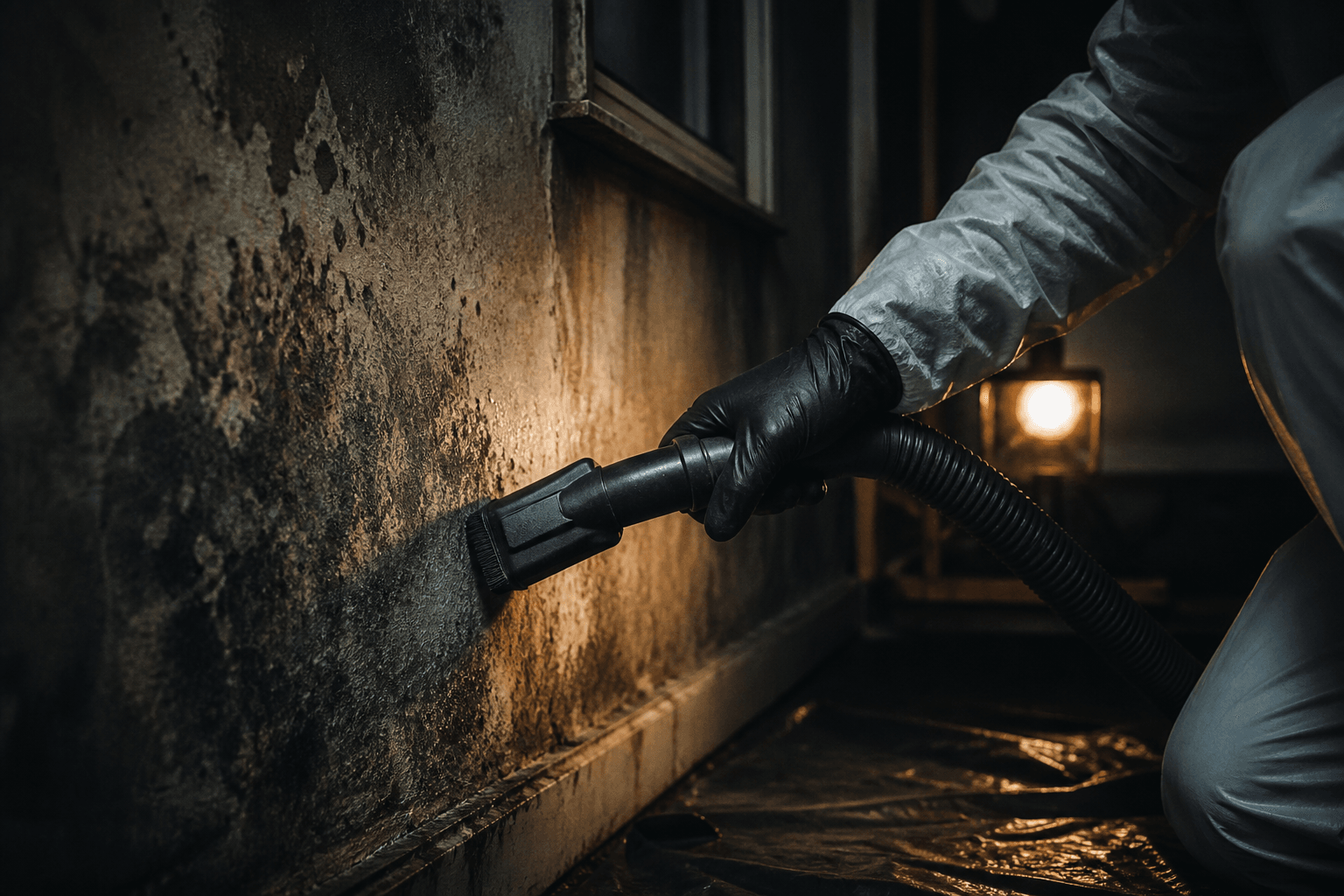
Our basement mold removal process addresses all of these zones: foundation walls, framing, insulation, drywall, and rim joists. We remove contaminated materials, treat the structural components, and then identify and address the moisture source — whether that's exterior waterproofing issues, poor drainage grading, high interior humidity, or plumbing problems.
Warning Signs to Watch For
- Musty smell in the basement that persists regardless of ventilation
- Visible dark spots or fuzzy growth on walls, framing, or insulation
- White efflorescence (mineral deposits) on concrete walls, indicating moisture movement
- Peeling paint or bubbling on the drywall near the floor
- Rust staining on concrete or metal fasteners
- History of basement flooding, seepage, or sump pump failures
What to Expect From Our Process
- Full visual and moisture inspection of all basement surfaces
- Identification of all affected zones including hidden areas
- Containment setup appropriate to the size and location of the job
- Removal of contaminated drywall, insulation, and framing as needed
- Treatment of all structural wood components in the affected area
- Moisture source assessment and correction or written recommendations
- Post-remediation verification sampling and written clearance report
What Causes Basement Mold in Regina
- Foundation wall moisture migration through aging or inadequate waterproofing
- Failed or undersized weeping tile unable to manage seasonal soil moisture
- Grade sloping toward the foundation directing snowmelt into the basement
- Exhaust fans, clothes dryers, or bathrooms introducing humid air to the space
- Condensation on cold surfaces during humid summer months
- Plumbing leaks inside wall cavities or floor joist spaces
Why Regina Property Owners Choose Us
- We inspect behind finished walls — not just visible surfaces
- Rim joist inspection included as standard on every basement job
- Moisture source correction is part of the job, not an add-on
- Written documentation for insurance claims or real estate disclosure
- Post-remediation lab testing with written clearance report
Questions About Basement Mold in Regina
Should I finish my basement before or after dealing with mold?
Always deal with mold first — without exception. Finishing over a mold problem seals it in behind new materials and allows the colony to continue growing in conditions that are even more favourable because air movement is restricted. By the time the problem resurfaces, you'll typically be demoing expensive finishes to get back to what you should have addressed at the start.
Can I just seal the walls and paint over the mold?
No. Encapsulant paints and concrete sealers can slow moisture movement but they don't kill active mold or remove mycotoxins already present in the material. The underlying colony remains alive and continues to affect air quality. Proper remediation means removing contaminated materials and treating the substrate.
How much of my basement drywall will need to be removed?
It depends entirely on how far the mold has spread and how long the moisture problem has been ongoing. In some cases we remove only a few sections; in others, the full perimeter has to come out. We won't know the full scope until we've done the inspection and, if needed, opened test sections of the wall to see what's behind.