Overview
Bathrooms are the single most common place mold shows up in Regina homes. High humidity, poor ventilation, and constant moisture cycling through grout, caulk, and drywall create near-ideal conditions. The difference between a bathroom mold problem that you can clean yourself and one that needs professional remediation comes down to how far the moisture has penetrated into the substrate.
Surface mold on tiles, grout, and caulk is usually the visible tip of a larger problem. The question is what's happening behind and below that surface. Bathroom walls are typically built with standard drywall or, in better construction, moisture-resistant drywall — but neither is truly waterproof. When shower pans leak, when caulk around tubs fails, or when a consistent condensation issue goes unaddressed for months, moisture gets into the wall cavity and colonizes the back of the drywall, the framing, and any fiberglass insulation present.
Ceiling mold in bathrooms is almost always a ventilation problem. When bath exhaust fans are too small for the space, are never actually turned on, vent into the attic instead of outside, or have an exhaust path blocked by a bird nest or debris, humidity has nowhere to go. It condenses on the ceiling and eventually mold follows. The ceiling treatment is straightforward; the ventilation correction is what makes it permanent.
Under-sink areas and the wall behind toilets are two other zones we check routinely. Slow supply line leaks, condensation on cold toilet tanks, and P-trap drips often go unnoticed for months. By the time they're discovered, the wall behind the vanity or the floor substrate under the vinyl has been colonized.
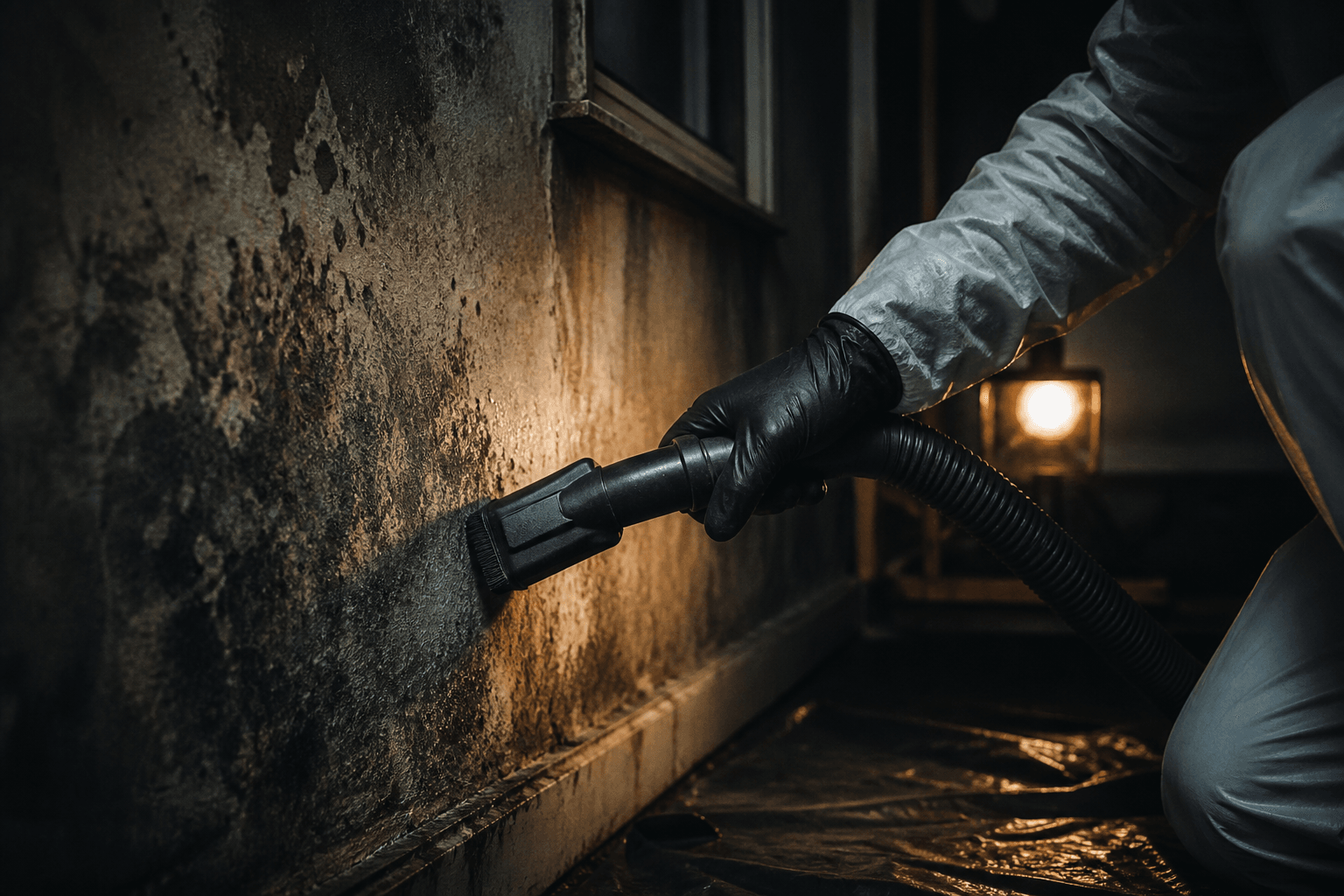
Our bathroom mold removal process covers all of these zones. We remove affected grout and caulk, open walls where moisture has penetrated, replace drywall and insulation, treat structural framing, and make or recommend the ventilation corrections needed to keep the bathroom dry.
Warning Signs to Watch For
- Black or dark spots on ceiling, especially above the shower
- Persistent mold on grout or caulk lines despite regular cleaning
- Paint bubbling or peeling from bathroom walls or ceiling
- Soft or discoloured drywall near the shower or tub surround
- Smell of mold when the bathroom is closed for several hours
- Visible water staining on walls or ceiling
What to Expect From Our Process
- Visual inspection of all surfaces including behind toilet, under sink, and near windows
- Moisture meter readings of walls, ceiling, and floor substrate
- Assessment of exhaust fan capacity and ductwork path
- Removal of affected grout, caulk, and drywall as needed
- Treatment of structural framing in the affected zone
- Ventilation correction or written recommendations
- Post-remediation verification to confirm the job is complete
Why Bathroom Mold Keeps Coming Back
- Exhaust fan too small for the bathroom volume — unable to clear humidity
- Fan venting into wall cavity, attic, or soffit instead of to the exterior
- Shower pan or tub caulk failure allowing water into wall cavities
- Supply line or P-trap leaks inside vanity cabinets
- Insufficient air exchange — bathroom door always closed, no passive ventilation
- Cold exterior wall in shower or tub surround causing condensation
Why Regina Property Owners Choose Us
- We check behind walls, not just surface mold
- Exhaust fan assessment and correction included
- We identify and stop the specific moisture source for each job
- All work done with containment to keep spores out of the rest of the home
- Post-remediation verification sampling available
Questions About Bathroom Mold in Regina
Can I clean bathroom mold with bleach and be done with it?
For surface mold on non-porous tiles, bleach works if it's the only treatment you need. But if the mold is inside grout, behind tile, or in the drywall, bleach won't reach it. And without fixing the moisture source — usually ventilation or a slow leak — it'll be back within a few weeks regardless of what you clean the surface with.
How do I know if the mold is just surface mold or something deeper?
Surface mold on tile and grout is typically visible and responds to cleaning, at least temporarily. Deeper mold usually shows up as paint that keeps bubbling or peeling, grout that keeps going black no matter how often you clean it, soft or discoloured drywall, or a persistent smell even after cleaning. A moisture meter reading of the wall behind the tile is the fastest way to know for certain.
Does my bathroom exhaust fan matter that much?
It matters enormously. A bath fan that's too small, too rarely used, or venting to the wrong location is the root cause of most bathroom ceiling mold we see. The fix is often straightforward — replacing the fan with a higher CFM unit or correcting the exhaust path to the exterior — and it's what makes the mold treatment permanent.