Overview
Crawl space mold is a silent problem. You probably won't see it or smell it in your living areas — but you'll feel it. Air circulates upward through a home through a process called the stack effect, which means whatever is happening in your crawl space is affecting the air quality throughout your entire house. Crawl space mold needs to be taken seriously.
Crawl spaces create ideal mold conditions almost by definition: limited airflow, proximity to soil moisture, cold surfaces in winter, and organic materials like floor joists, blocking, and subfloor sheathing for mold to colonize. In Regina homes, crawl spaces are less common than in warmer climates but they do exist, particularly in older homes and in areas with variable lot elevations.
The stack effect means that 30 to 50 percent of the air in your living spaces on the first floor passed through your crawl space first. If that crawl space has active mold growth, fungal spores and mycotoxins are being carried up through floor penetrations, ductwork, and natural air leakage paths into the spaces where your family spends time. This is why crawl space mold so often manifests as unexplained health symptoms before it's ever actually seen.
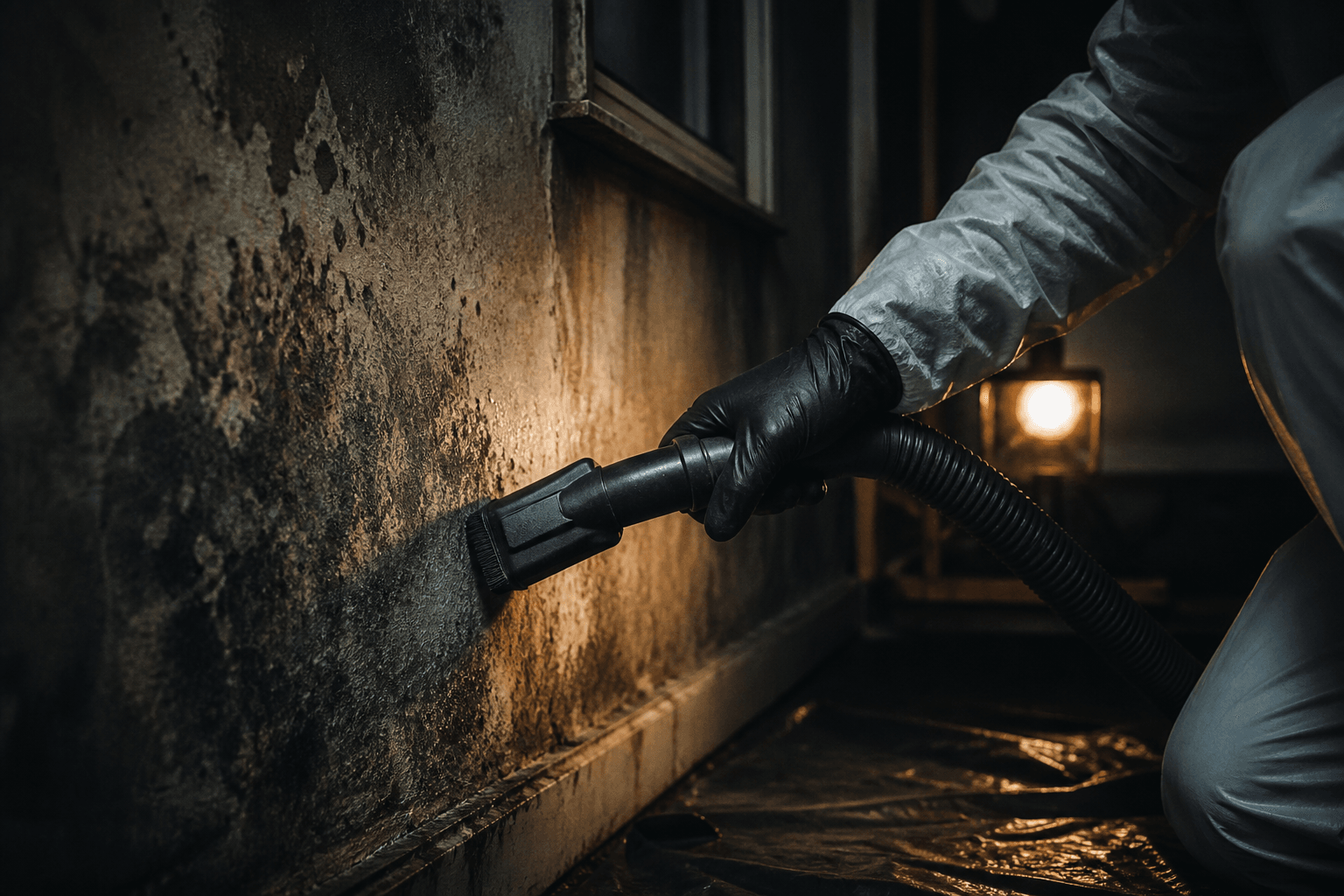
Crawl space mold removal involves more than just treating the visible mold. Floor joists, rim joists, blocking, and the subfloor deck all need to be assessed and treated. Existing insulation — which is usually fiberglass batts between the joists that have absorbed moisture — is typically removed, as it can't be effectively dried or cleaned once colonized. After remediation, crawl space encapsulation (a heavy-duty poly vapour barrier on the ground surface and walls, sealed at all penetrations) is the standard approach to preventing recurrence.
Encapsulation changes the performance of the crawl space fundamentally. By sealing the ground surface and conditioning the space, you eliminate the moisture drive from the soil that feeds mold growth. Paired with a small dehumidifier or conditioned air supply, an encapsulated crawl space stays dry and clean.
Warning Signs to Watch For
- Musty smell noticeable on the main floor, particularly near the floor
- Floor feels spongy or soft in spots (subfloor moisture damage)
- High indoor humidity that persists despite air conditioning
- Visible mold on the underside of the subfloor or floor joists
- Condensation on basement pipes or ductwork in summer
- Household members with persistent respiratory symptoms
What to Expect From Our Process
- Full crawl space inspection including joists, rim joists, and subfloor
- Moisture mapping of all wood components
- Removal of contaminated insulation
- Treatment of all structural wood components
- Ground vapour barrier installation if not present
- Crawl space encapsulation for long-term moisture control
- Post-remediation sampling and written clearance report
What Causes Crawl Space Mold
- Ground moisture evaporating from exposed soil
- Inadequate or absent vapour barrier on the crawl space floor
- Vented crawl spaces introducing warm moist outside air in summer
- Plumbing leaks from supply lines or drain pipes above the crawl space
- Condensation on cold HVAC ducts during humid periods
- Ice and snowmelt infiltration at the foundation perimeter
Why Regina Property Owners Choose Us
- We treat the whole crawl space, not just visible growth
- Insulation removal and replacement included where needed
- Encapsulation available as an integrated part of the remediation
- Stack effect assessment — we consider the whole-home air quality impact
- Post-remediation verification with lab-analysed samples
Questions About Crawl Space Mold in Regina
Is crawl space encapsulation necessary after mold removal?
Not always mandatory, but usually strongly recommended. Encapsulation addresses the root cause — ground moisture — and makes recurrence unlikely. Without it, a new vapour barrier or other moisture controls should at minimum be installed to replace what the crawl space currently lacks.
Can crawl space mold affect my health if I never go in there?
Yes. The stack effect means air migrates upward through the building from the lowest space to the highest. Mold spores from an active crawl space colony regularly enter living areas through floor penetrations and ductwork. You don't need to physically enter the crawl space to be exposed.
How do I know if I have a crawl space or a basement?
A crawl space is typically less than 4 feet tall and not designed as a living or storage area. A basement is tall enough to stand in and is often partly finished. Both can develop mold for similar reasons, but the remediation approach differs. If you're not sure which you have, give us a call and describe your foundation — we can help you figure it out.