Overview
Black mold — specifically Stachybotrys chartarum — is the species homeowners worry about most, and for good reason. It produces mycotoxins that can affect indoor air quality and has been associated with respiratory symptoms, particularly in children, elderly individuals, and people with compromised immune systems. If you've found what looks like black mold in your Regina home, don't disturb it. Call us first.
The term 'black mold' is used loosely — not every dark-coloured mold is Stachybotrys. Many common mold species appear black or dark green. But Stachybotrys has specific characteristics: it's slimy when wet, powdery when dry, typically has a greenish-black colour, and grows almost exclusively on cellulose-rich materials (drywall paper, wood, ceiling tiles) that have been wet for an extended period — usually more than a week.
What makes Stachybotrys particularly concerning is the mycotoxin issue. Some strains produce trichothecene mycotoxins that can become airborne on mold fragments and spores. Standard DIY cleanup approaches — bleach wipe-downs and painting over — don't address this. They also tend to disturb the colony and spread contaminated material throughout the home.
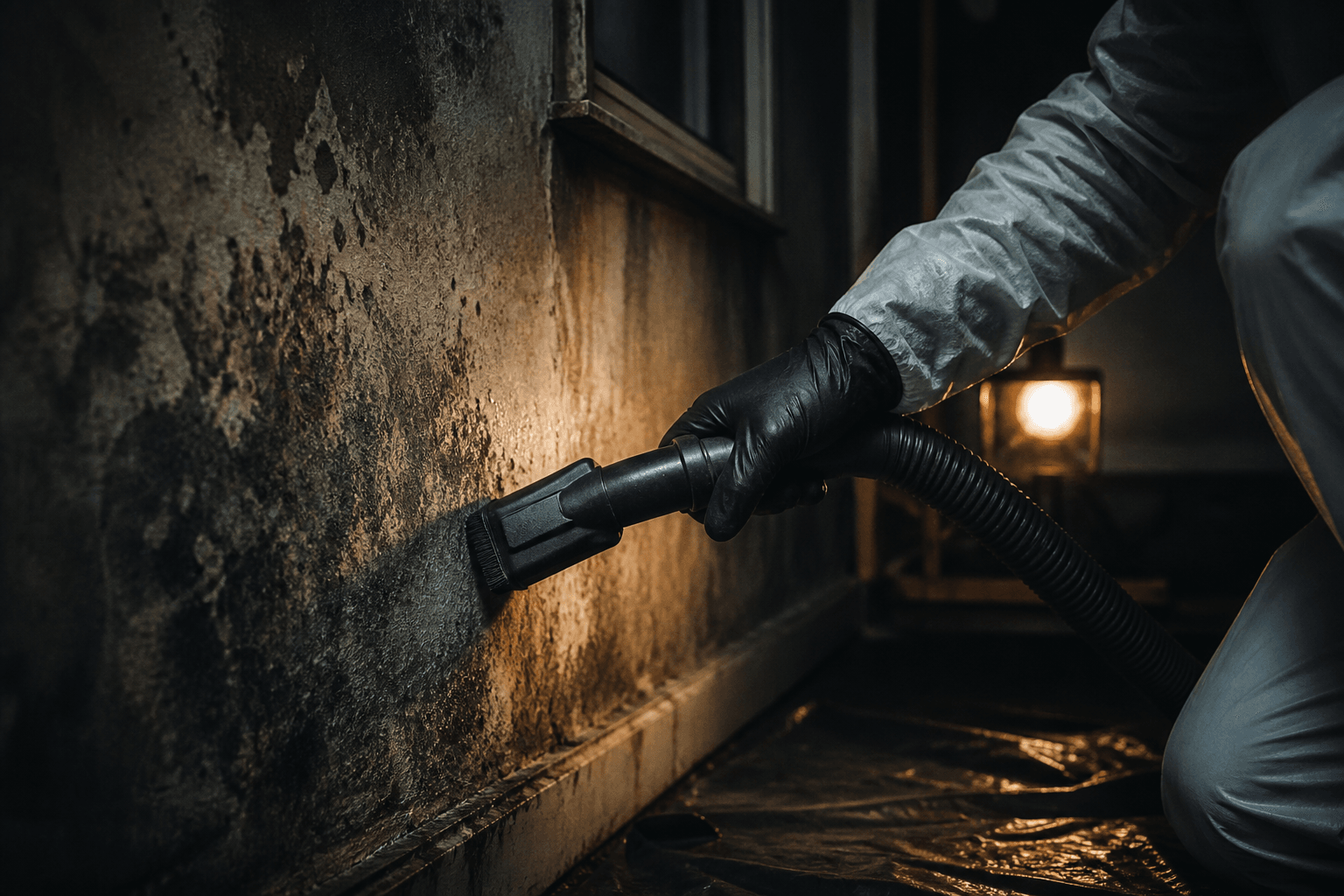
Safe black mold removal requires full containment with negative air pressure, appropriate PPE for the technicians, physical removal of all contaminated materials (you can't clean black mold off drywall — the drywall has to go), HEPA vacuuming, and antimicrobial treatment of all surfaces in the affected zone. Post-removal air testing confirms that spore counts have returned to acceptable levels before the space is reopened.
In Regina homes, we most commonly find Stachybotrys in chronically wet basement areas — behind finished basement walls where a slow leak or chronic seepage has been occurring for months or years — and in attic spaces where exhaust fans have been venting humid air directly onto roof sheathing.
Warning Signs to Watch For
- Dark greenish-black mold, slimy when wet or powdery when dry
- Mold growing in an area with a history of long-term moisture problems
- Residents experiencing persistent respiratory symptoms, headaches, or fatigue
- Mold on drywall, ceiling tiles, wood framing, or cardboard
- Strong musty or earthy odour in the affected area
What to Expect From Our Process
- Visual identification and testing to confirm mold species
- Full containment with poly barriers and negative air pressure
- Appropriate PPE protocols for all technicians on site
- Complete removal of all contaminated porous materials
- HEPA vacuuming of all surfaces in the affected zone
- EPA-registered antimicrobial treatment
- Air and surface sampling sent to independent lab
- Written clearance report before the zone is reopened
Where Black Mold Grows in Regina Homes
- Behind finished basement walls where water has been infiltrating through the foundation
- Attic spaces with exhaust fans venting into the attic
- Below-grade utility rooms with poor drainage
- Inside wall cavities near plumbing fixtures with slow leaks
- Under flooring in areas with water damage history
Why Regina Property Owners Choose Us
- Confirmed species identification before remediation begins
- Full containment — no spore spread to unaffected areas
- All contaminated porous materials removed, not just surface-treated
- Independent post-remediation lab testing
- Full documentation for insurance or real estate transactions
Questions About Black Mold in Regina
Is all black mold the same thing?
No. Many mold species appear black or dark in colour. Stachybotrys chartarum is the specific species commonly called 'toxic black mold' because of its potential to produce mycotoxins. We can test to identify exactly what you have — that information affects the remediation approach.
Can I use bleach to clean black mold?
Bleach can kill surface mold on non-porous materials, but black mold typically colonizes porous materials like drywall and wood where bleach can't penetrate. Scrubbing with bleach can also disturb the colony and spread spores. For any confirmed or suspected Stachybotrys, professional removal with proper containment is the right approach.
How dangerous is black mold, really?
The research on Stachybotrys is nuanced. Mycotoxin production varies by strain and environment, and health effects depend heavily on exposure level, duration, and individual sensitivity. What's clear is that any significant mold growth in a living space is a problem worth addressing — both for the structure of the home and for air quality.